

In most cases you will need explicit permission from the landlord before adding a new lock or making a permanent change to a door in a rented room and, if you are looking for listings, check singapore room rent solutions.
Tenancy agreements commonly restrict alterations to fixtures and fittings because owners must retain control of access and ensure the property remains compliant with building safety rules. Changing or installing hardware without consent can lead to disputes or deductions from the security deposit.
Permanent installations such as replacing a deadbolt or drilling for a digital lock are treated differently from temporary devices that require no modification. Portable devices that clamp to the door or wedge under it usually cause no damage and are often tolerated but still benefit from a quick confirmation. For HDB flats and some condominiums there are additional building management rules that owners must observe so the landlord may need to check local guidelines before approving the work.
When you ask for permission be specific. Provide the lock model and method of installation and state whether a professional installer will be used. Offer to return the door to its original condition at move out and to cover reasonable costs for removal. Keep all communication in writing and save photographs of the door before and after installation. This documentation protects both tenant and landlord and clarifies expectations about emergency access and repairs.
Written permission is the simplest way to avoid problems. If the landlord declines consider proposing a non invasive alternative or a cost sharing arrangement for professional installation and later reinstatement. With clear agreement in place you gain improved security while preserving a smooth tenancy relationship.
Types of locks and security devices tenants commonly use
Tenants choose from a range of locks and security devices depending on how permanent the change will be and what the landlord allows. Some options require drilling and landlord approval while others are temporary and can improve security without altering the door.
Consider durability, emergency access and compatibility with the door type before selecting a device. For HDB flats and managed condominiums check any management rules that may affect what is permitted.
- Portable door locks These clamp or wedge into the door frame and need no tools or permanent fitting. They are ideal for short stays and offer extra privacy without landlord consent in most cases.
- Surface mounted deadbolts These attach to the inside face of the door and require screw fixing. They provide strong locking but usually need written permission and professional installation to avoid deposit disputes.
- Auxiliary rim latches and chains These allow partial opening for verification of visitors while keeping the door secured. They are low cost and commonly accepted but still involve adding fixtures to the door.
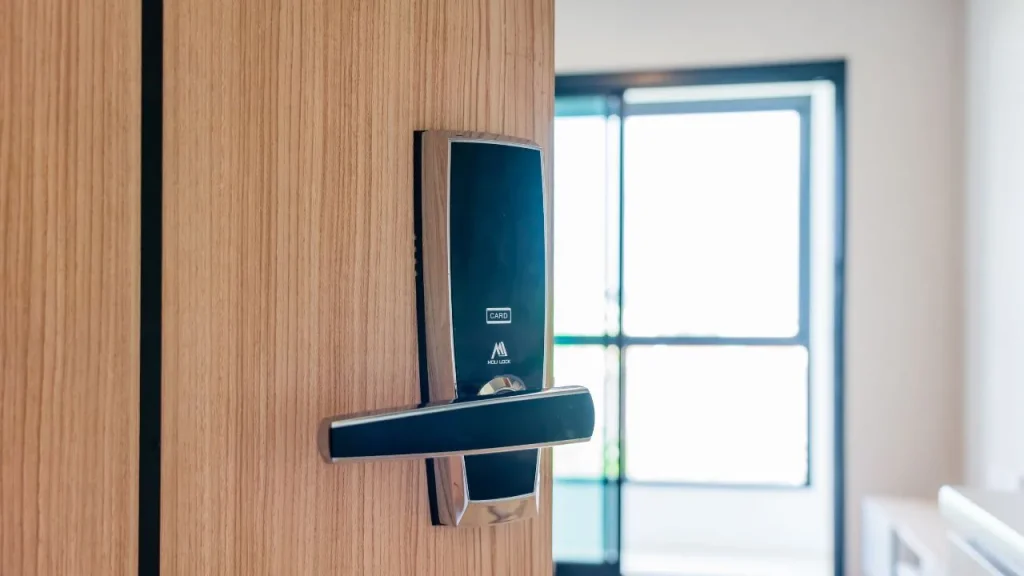
- Smart keypad or electronic locks Battery powered options remove the need for carried keys and can log access. They often require modification to the door so discuss installation, warranty and emergency override with the landlord first.
- Door braces and security bars These sit under the door handle to resist forced entry without altering the door. They are non invasive and useful in rented rooms where permanent fittings are not allowed.
Keep records of any agreement and photographs of the door before and after fitting. When in doubt request written approval and offer to restore the original condition at move out to maintain a good tenancy relationship.
Safety and emergency access rules to consider
In Singapore safety and emergency access must shape any decision to add or change a lock in a rented room. Fire and escape rules require that occupants can leave quickly without a key so locks that need a key to open from the inside are not suitable for bedrooms or main exit doors. Building managers and HDB guidelines can require that fire rated doors remain unmodified so drilling through a door leaf or changing its construction may need prior approval.
Emergency responders and the landlord may need access in urgent situations so keep a clear plan for spare keys. A practical approach is to choose a lock that permits immediate release from the inside with a thumbturn or mechanical override and to provide a spare key to the landlord or to the condominium concierge if one exists. For electronic locks keep batteries fresh and note how to operate any manual fallback in case of power failure.
Do not block corridors stairwells or common escape routes with braces or security devices that could hinder evacuation. Always confirm with your landlord that the chosen device will not void the door warranty or breach building management rules and get any permission in writing. Photograph the door before and after installation to show condition and to support a smooth deposit return.
If you live in a flat under managed property ask whether there are specific access procedures for maintenance staff or for emergency services so your lock choice aligns with those procedures. Communicate clearly with housemates about emergency access and where spare keys are kept. With the right device and written agreement you can improve personal security while preserving safe egress and keeping landlords and emergency services able to act when needed.
How to request permission and negotiate with your landlord
Begin the conversation with clear facts and a practical proposal. Outline the exact device you want, how it will be installed, who will do the work and how you will restore the door at move out. Presenting details upfront reduces friction and shows you respect the property and the landlord rights.
Prepare a concise written request
Send a short message that lists the lock model, whether drilling is required and the installer qualifications. Attach photographs of the current door and a manufacturer specification sheet when available. Offer a timeline for installation and a commitment to return the door to its original condition if required.
Negotiate cost and liability terms
Propose reasonable solutions if the landlord is hesitant. Suggest paying for professional installation in exchange for sharing removal costs later. Offer to buy insurance for accidental damage and to deduct agreed costs from the deposit only with documented invoices. Be ready to accept a temporary device if the landlord prefers no permanent change.
Agreement details and safeguards
Written permission
Insist on a simple written agreement that records permission status who pays and who will remove the device at move out.
Emergency access and compliance
Confirm that the lock allows release from the inside that meets fire safety rules and that spare keys or override access are agreed for emergencies.
Keep copies of all correspondence and photographs from before during and after installation. A courteous approach with documentation and sensible compromises usually leads to a clear outcome that improves your security while protecting the landlord interests and the tenancy deposit.
Cost responsibility installation and removal at move out
When a tenant requests a new lock the default expectation in Singapore is that the tenant covers the cost unless the landlord specifically offers to pay. Typical price ranges help set realistic expectations. Portable non invasive devices commonly cost SGD 10 to SGD 50. Surface mounted deadbolts and auxiliary latches generally range from SGD 80 to SGD 250 with professional installation adding SGD 50 to SGD 150.
Smart keypad or electronic locks usually cost SGD 300 to SGD 900 and installation can add SGD 80 to SGD 200 depending on door type. Always propose a licensed installer if drilling is required and obtain written permission that states who pays for parts and labour. Keep receipts and photographs of the door condition before and after work so repair claims are verifiable.
At move out tenants are normally expected to restore the door to its original condition unless the landlord agrees to retain the device. If removal is required arrange professional removal during the final week of tenancy and present invoices to show proper reinstatement.
If you want the landlord to keep the device offer a fair buyout or request the landlord to confirm acceptance in writing and note any reduction or refund to the security deposit. Absent written agreement a landlord may deduct documented repair or replacement costs from the deposit.
Provide spare keys and operation instructions for electronic devices to avoid emergency access issues. Clear written terms and a simple cost sharing proposal resolve most disputes and protect both tenant and landlord finances.